
A ranch visit can leave more than mud on the floor mat. Seeds stick in laces, trouser cuffs and the seams of a bag. When the next visit is to a different property that small collection will travel along unless someone removes it. For a Texas varmint hunter cleaning up between properties is a courtesy to add to the normal talk with the landowner.
Start before the gate
The National Park Service recommends removing dirt and plant material from footwear and cleaning outdoor equipment to help stop the spread of invasive species. This principle works beyond a park: check the items that touched vegetation or soil before moving them elsewhere. You do not need to identify every seed stuck in a sock. Remove the visible material so it does not travel to the next property.
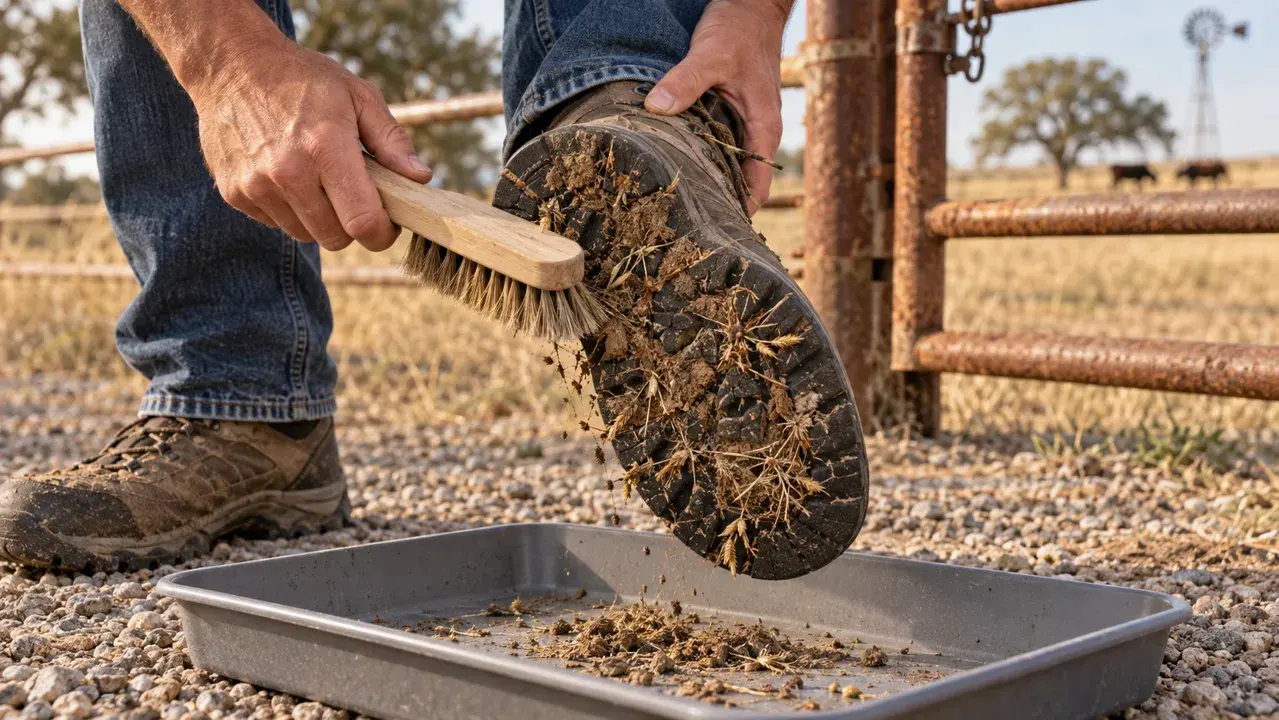
Give yourself a place to do the job. A small brush and a tray help you see what comes out of a boot tread. Keep the collected debris contained. Follow local disposal advice. Brushing everything into the grass at your destination defeats the purpose. If the property has a cleaning area use it and ask where the material should go.
Look beyond the soles
Set the boots aside for a moment. Check cuffs, laces and hook‑and‑loop fasteners. Open the pockets of the bag you set down beside the vehicle. These places are easy to miss because they do not always look dirty from a distance. Work through the same order each time so that a clean pair of boots does not distract you from a jacket still holding burrs.
Ask anyone travelling with you to do the same with their clothing and equipment. This routine is easier as an end-of-visit habit than as a surprise check at the next gate. A brush kept handy is more useful than one hidden under the rest of the luggage.
Separate removal from washing
Start by removing material then use the cleaning method that is recommended for the item. A waterproof boot, a fabric bag and a vehicle interior do not all tolerate the same products. You do not need to invent a disinfectant mixture for ordinary seed removal. If a landowner has a disease‑control or equipment‑cleaning requirement get that instruction directly instead of treating this general routine as a substitute.
Let cleaned equipment dry as its manufacturer recommends before storage. Keep dirty items apart from clean ones while you work. A washable container can help keep the vehicle tidy. Putting muddy boots into a box is only containment; the boots still need attention before their next outing.
Make the return visit easier
Before leaving again check the easily missed items one last time. Ask the host about vehicle access and any cleaning arrangements before arrival. That short conversation fits with the details of the visit even when you know the property well. The useful result is simple: your equipment arrives ready for use with less of the previous property’s soil and vegetation attached to it.
